


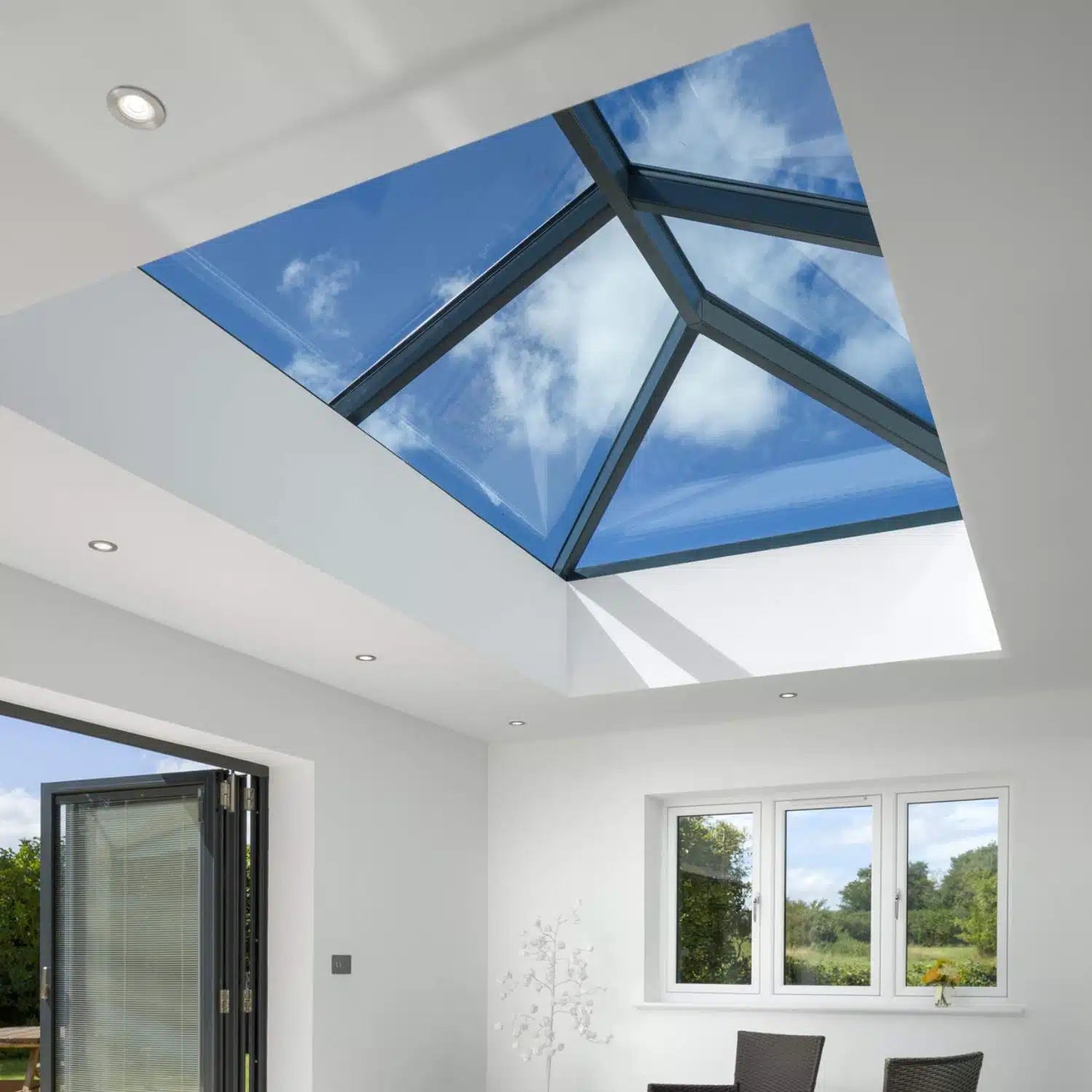
Roof lantern weight matters more than most homeowners realise. It directly impacts structural safety, installation logistics and can even signal the quality of glazing and thermal performance you’re getting.
What’s the Typical Weight Range for Roof Lanterns?
Roof lantern weight varies based on three key factors: size, glazing specification and frame material.
Unlike flat rooflights that lie flush with your roof, roof lanterns project upwards with supporting frames and rafters, adding significant weight.
As an example, a 3 m × 2 m triple-glazed aluminium lantern from one manufacturer is quoted as weighing around 326 kg.
In general, double-glazed roof lanterns often weigh in the region of ~40-60 kg per m², while triple glazing adds extra weight.
Why Does Roof Lantern Weight Matter?
Your roof structure: joists, upstand, substrate and fixings, must safely support the roof lantern’s dead load plus additional live loads (maintenance access, snow accumulation, wind pressure).
Under-sizing structural support can lead to sagging, glass seal failure and water leaks.
This is non-negotiable. An undersized structure isn’t just uncomfortable; it’s a liability.
Installation Logistics
Heavier lanterns often require more operatives, specialist lifting equipment or craning, particularly in challenging access scenarios like terraced properties or urban sites.
This increases both installation cost and on-site risk.
Does a Heavier Roof Lantern Mean Better Quality?
Here’s what many don’t realise: weight often signals quality.
Heavier lanterns typically reflect more substantial glazing such as thicker panes, laminated specifications or triple-glazing, which directly improves thermal and acoustic performance.
A heavier lantern isn’t a flaw; it’s often evidence of superior engineering.
How Do I Check If My Roof Can Support a Roof Lantern?
Step 1: Get the Manufacturer Specification Sheet
Request weight data broken down by size variant and glazing type. This should be readily available from any reputable manufacturer.
Step 2: Verify Full Specification Weight
Confirm the weight includes glass, frame, flashings and all hardware in finished state. Don’t compare incomplete specifications.
Step 3: Check Your Roof’s Load-Bearing Capacity
Review your roof structure’s capacity to support:
- The lantern’s dead load
- Associated kerb/upstand and fixings
- Additional live loads (snow, wind, maintenance access)
If you’re uncertain, a structural survey is worthwhile. Often just a few hundreds pounds, but a small investment to avoid potential costly issues.
Step 4: Factor in Installation Access
Consider transport, handling and installation logistics. Lofted properties, terraced sites and restricted urban access may require additional equipment or planning.
Do Different Roof Lantern Brands Have Different Weights?
Different manufacturers and glazing choices produce different weights for similar-sized units:
- Double-glazed systems (U-value ~1.0 W/m²K): typically lighter, lower cost
- Triple-glazed systems (U-value ~0.7 W/m²K): substantially heavier, superior thermal performance
- Specialist coatings (Low-E, solar-control, acoustic): minimal weight increase, significant performance gain
Premium brands like Korniche and Atlas engineer for both performance and weight efficiency, using advanced aluminium profiles to minimise weight without compromising strength.
What Are the Next Steps for My Roof Lantern Project?
1. Compare Weight Specifications When evaluating roof lanterns, request weight data alongside thermal performance figures. Don’t choose based on price alone. Understand what the extra weight (or lighter weight) represents.
2. Consult Early Before committing to a specific lantern, confirm with your installer or a structural engineer that your roof can safely support it. This takes one conversation and prevents costly rework.
3. Plan Installation Logistics Discuss access, equipment needs and installation timeline with your installer. Heavier units may require additional lead time or specialist equipment. Plan accordingly.
4. Factor Weight Into Value A heavier triple-glazed system delivering U-values of 0.7 W/m²K offers better long-term value than a lighter double-glazed alternative at 1.0 W/m²K. Better thermal performance means lower heating bills and greater comfort year-round.
Ready to Explore Your Options?
Our team can guide you through the structural considerations and help you select a system that’s perfect for your roof, your space and your budget.
Browse our Korniche, Atlas, Sheerline, Infinity and Solaris roof lanterns today.
Share:
Will My Roof Lantern Be Noisy When It Rains? The Complete Guide
Roof Lanterns: The Complete Guide for UK Homeowners